Read the comic reflection
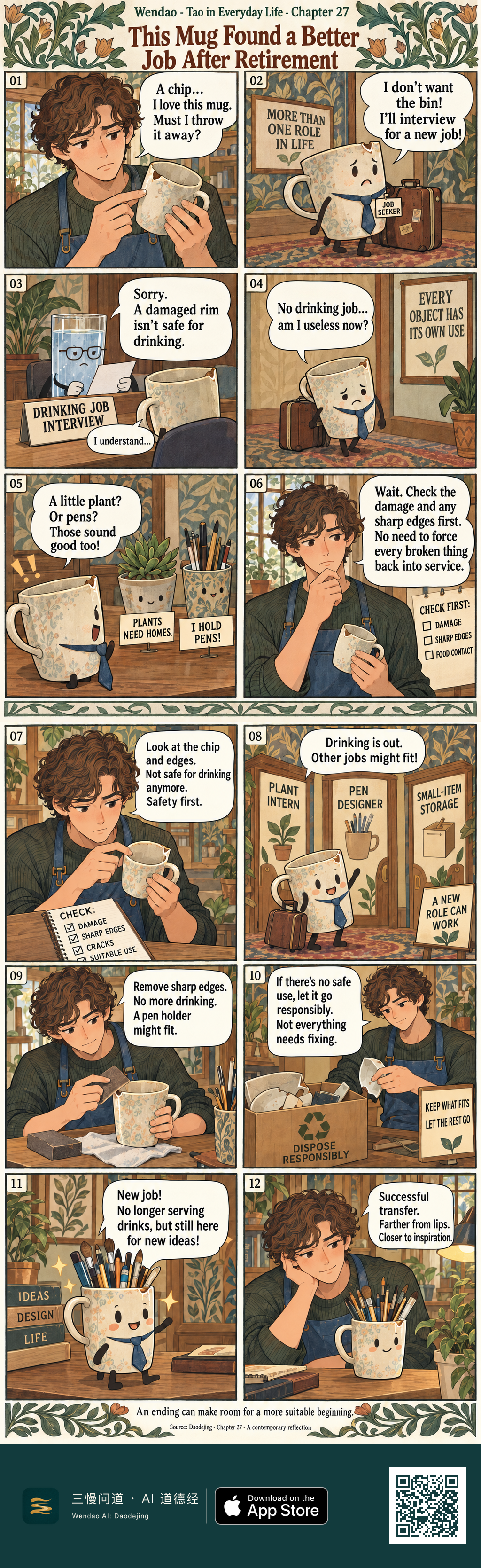
The opening joke treats an ordinary damaged mug like the hero of a very serious workplace drama. A curly-haired man in a green sweater and blue apron studies the chipped floral mug and wonders whether loving it means he has to keep it. One panel later, the mug has grown arms and legs, put on a blue tie, packed a brown suitcase marked "JOB SEEKER," and marched off to interview for another position. The framed slogan "MORE THAN ONE ROLE IN LIFE" makes the career-change metaphor even more solemn, which is exactly what makes the scene funny.
The drinking-job interview does not bend the rules for sentiment. A tall glass wearing spectacles sits behind the desk beneath a "DRINKING JOB INTERVIEW" sign and calmly explains that the damaged rim is not safe for drinking. The mug answers, "I understand..." and later walks away with its suitcase, asking whether losing that one role means becoming useless. The next visual turn answers the question through props rather than a lecture: a little plant and a cheerful penpot appear as alternative possibilities, each with its own tiny sign, so the story opens new uses without pretending the original use is still suitable.
Before the mug actually changes jobs, the comic returns from personified comedy to practical inspection. The man holds the chipped rim close, checks the damage, sharp edges, cracks, and suitable use, and explicitly says that it is no longer safe for drinking. On the lower page he repeats that careful examination with a written checklist. This pause matters because the story does not jump from affection directly to repair. The visible turning point is assessment: first decide what the object can safely do now, then decide whether a new role makes sense.
The new role is presented as one option among several, not as a command to rescue everything. Three doors offer "PLANT INTERN," "PEN DESIGNER," and "SMALL-ITEM STORAGE," while the mug happily announces that other jobs might fit. The man then carefully removes sharp edges and states again, "No more drinking. A pen holder might fit." In the next panel, separate broken pieces go into a box labeled "DISPOSE RESPONSIBLY," beside the sign "KEEP WHAT FITS / LET THE REST GO." The humour stays gentle because the comic allows both outcomes: some things can be repurposed, while others can simply be released.
The ending gives the mug a visible, specific second career. It stands on the desk full of pencils and brushes, still proudly wearing its tie, with books titled "IDEAS," "DESIGN," and "LIFE" beside it. In the final panel, the man rests his cheek on one hand and looks at the pen-filled mug near a sketchbook, lamp, and green plant, saying, "Successful transfer. Farther from lips. Closer to inspiration." The closing line, "An ending can make room for a more suitable beginning," connects naturally with the supplied passage as a contemporary reflection: not discarding something too quickly can reveal another fitting use, while the comic also keeps safety checks and responsible disposal firmly in view.
No material is cast aside; this is called hidden illumination.
Daodejing · Chapter 27
English rendering of the Silk B base reading excerpt
The next time you have a damaged object you still like, try the same three-part check shown in the comic: is it safe, can its original use continue, and is there a suitable non-food-contact use instead? If nothing fits, letting it go responsibly is also a valid ending. If a safer new role does fit, give it a place that matches what it can do now.