Read the comic reflection
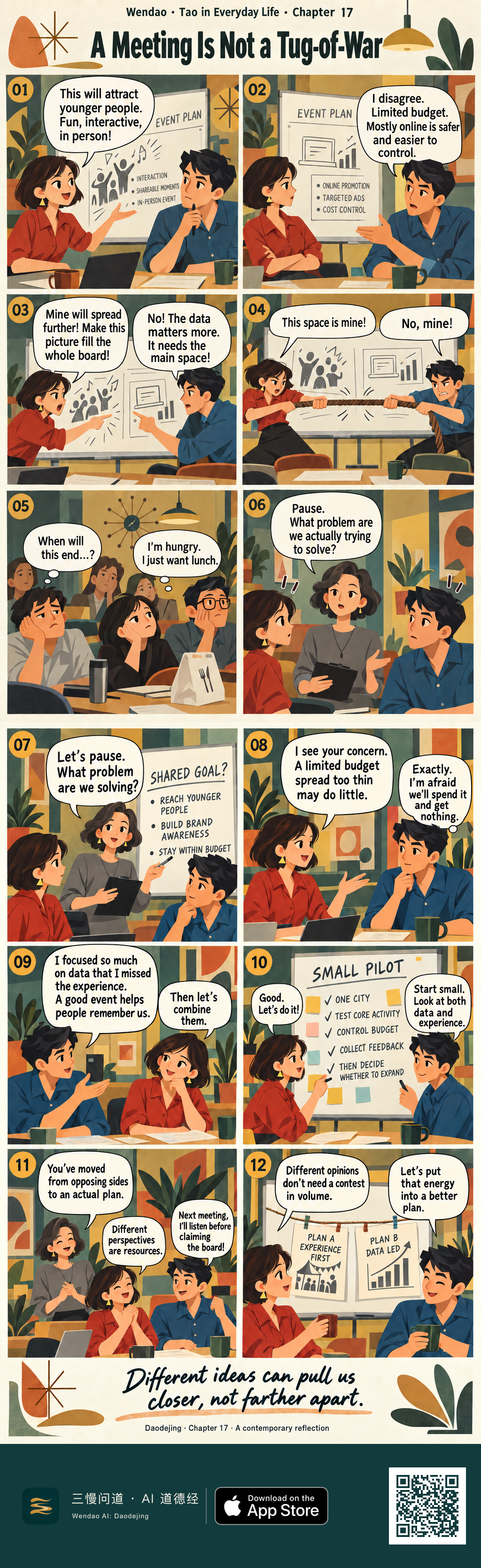
The opening joke is wonderfully literal. The red-bloused woman wants an event that is fun, interactive, shareable and attractive to younger people, while the blue-shirted man argues that a limited budget makes online promotion safer and easier to control. By panel 03, they are no longer merely comparing ideas: each is pointing at the whiteboard and demanding the main space for a different kind of evidence. Panel 04 turns that territorial argument into an actual rope, with both of them leaning backward and pulling as if the meeting room has become a sports field. The funniest counterpoint arrives in panel 05. Their colleagues are not inspired by the drama at all; one wonders when it will end, while another is simply hungry and wants lunch. The lunch bag, mugs and tired faces gently puncture the grandeur of the contest.
The real turning point is not that one person wins. In panel 06, the gray-dressed mediator steps between them and asks, "What problem are we actually trying to solve?" The next page keeps that question visible by changing the whiteboard into "SHARED GOAL?" and listing three concrete aims: reaching younger people, building brand awareness and staying within budget. That visual shift matters because the board is no longer territory to be claimed by either side. The red-bloused woman then reflects the man's concern back to him, acknowledging that a limited budget spread too thin may do little. His reply confirms that she has understood the fear underneath his position: spending the money and getting nothing. The scene moves from defending a proposal to accurately hearing the concern behind it.
Panel 09 lets the movement go both ways. The blue-shirted man admits that focusing so much on data made him miss the experience, and he recognizes that a memorable event has value within the discussion. The woman does not answer by declaring victory; she simply says, "Then let's combine them." The next panel makes that combination concrete rather than vague. Their board becomes "SMALL PILOT," with one city, a test of the core activity, a controlled budget, feedback collection and a later decision about whether to expand. She says, "Good. Let's do it!" while he proposes starting small and looking at both data and experience. The comic therefore does not erase the disagreement or pretend that every concern has vanished. It turns two valid concerns into a limited experiment whose next step can be observed rather than shouted into existence.
The ending gives the rope joke a satisfying second life. In panel 11, the mediator notes that the pair have moved from opposing sides to an actual plan. The woman calls different perspectives resources, and the man jokes that next time he will listen before claiming the board. Then panel 12 brings back the rope that once represented stubborn pulling. It now stretches calmly across the background as a line holding two sheets: "PLAN A / EXPERIENCE FIRST" and "PLAN B / DATA LED." Neither sheet has been thrown away. The woman and man sit with mugs, smiling, while saying that different opinions do not need a contest in volume and that the energy can go into a better plan. The visual symbol of conflict has not disappeared; its purpose has changed. That small transformation carries the ending more effectively than a sudden speech about perfect harmony would.
The line, "How hesitant they are—how they value their words," can be connected to this story as a contemporary reflection rather than treated as a literal explanation of the comic. The mediator speaks sparingly at the decisive moment: instead of adding another proposal, she asks one question that redirects attention toward the shared problem. After that, the characters do more listening, restating and testing, and less competing for verbal dominance. The comic's closing line, "Different ideas can pull us closer, not farther apart," fits that pattern without claiming that silence itself solves disagreement. A useful connection is that words can carry more weight when they clarify what matters rather than merely occupy more space. That is one possible everyday association with the excerpt, not the only interpretation of the ancient text.
How hesitant they are—how they value their words.
Daodejing · Chapter 17
English rendering of the Silk B base reading excerpt
When a discussion gets stuck, try one small move before adding another argument: restate the other person's real concern in one sentence, then write down the goal you both accept. If the disagreement remains, consider a limited test that lets both concerns stay visible.