Read the comic reflection
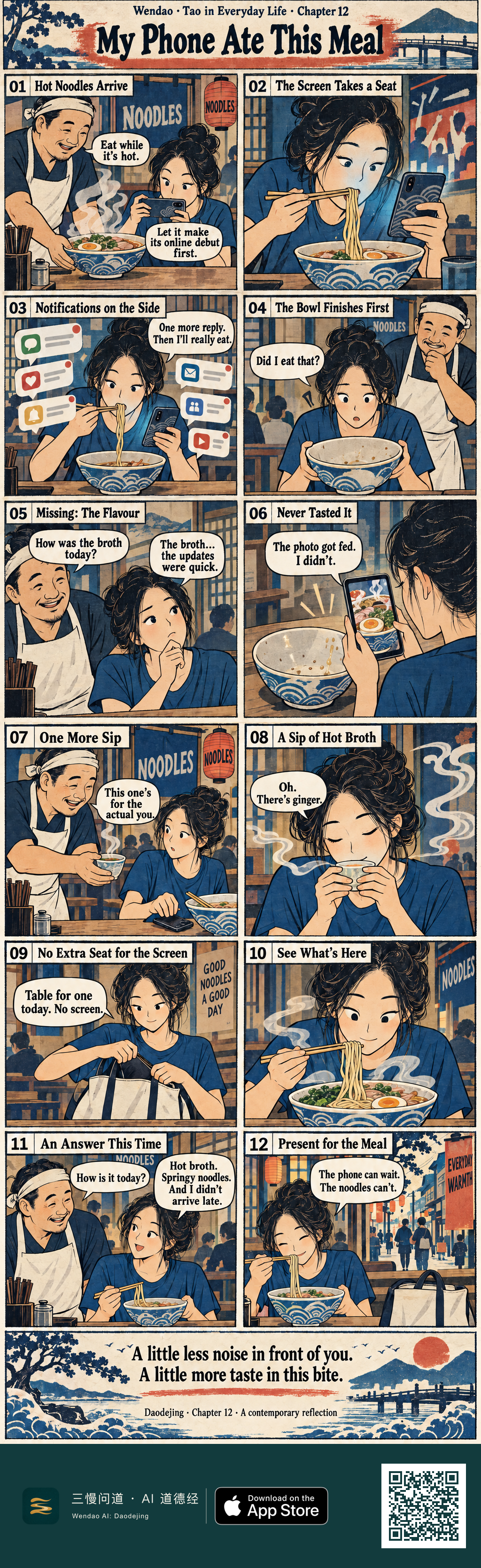
The opening joke is wonderfully literal. A smiling cook in a white apron brings over a steaming blue-and-white noodle bowl and tells the woman, "Eat while it's hot." She is already holding her phone horizontally for a photo and answers, "Let it make its online debut first." Against the indigo, red and cream woodblock-style noodle shop, the modern phone feels deliberately out of place. The food is physically right in front of her, but her attention has already taken a seat somewhere else.
The distraction then becomes almost another diner at the table. In "The Screen Takes a Seat," she lifts noodles with chopsticks while staring at the phone, and in "Notifications on the Side," generic message, heart, bell, mail, group and video cards crowd around her as she says, "One more reply. Then I'll really eat." The visual punch line lands in the next panel: she holds up an empty bowl and asks, "Did I eat that?" She clearly did eat; what went missing was her awareness of the meal as it happened.
That gap becomes even funnier when the cook asks, "How was the broth today?" The woman pauses with her hand at her chin and can only answer, "The broth... the updates were quick." The comic does not turn the phone into a villain or suggest she literally went hungry. Instead, the joke is that her hands and mouth completed the meal while the details that normally make eating memorable—heat, aroma, texture and taste—barely registered. The photo on her screen remembers the noodles better than she does.
The turning point is deliberately small. The cook offers a little cup and says, "This one's for the actual you." She sets the phone down, takes the cup in both hands, closes her eyes, and notices, "Oh. There's ginger." On her next visit, the phone is visibly being tucked into her bag as she says, "Table for one today. No screen." The wall behind her reads "GOOD NOODLES / A GOOD DAY," and the following silent panel lets the steam, greens, egg and lifted noodles occupy the space that notifications filled before.
By the final two panels, she can finally answer the cook's familiar question with concrete details: "Hot broth. Springy noodles. And I didn't arrive late." The last line, "The phone can wait. The noodles can't," lands as light self-correction rather than a declaration against technology. Her bag and phone still belong to ordinary life, the street outside remains busy, and a sign reads "EVERYDAY WARMTH." The closing words—"A little less noise in front of you. A little more taste in this bite."—connect naturally with the supplied passage: not as its only possible meaning, but as a contemporary image of choosing direct experience over constant visual stimulation.
Therefore, in the sage's way of governing, he acts for the belly, not for the eyes; thus he lets go of that and chooses this.
Daodejing · Chapter 12
English rendering of the Silk B base reading excerpt
At one meal, you might try the woman's small experiment: put the phone in a bag or turn it face down for the first few bites. Notice the steam, colour, temperature and texture before deciding whether anything needs a reply. The point is not to reject the screen, only to give the meal a brief turn at being the main thing in front of you.